How to Choose Abstract Paintings for Sale - A Collector's Guide
Share
There's a moment most people experience standing in front of an abstract painting - something pulls you in before you've had a chance to think about it. A color relationship, a tension between forms, a surface that seems to move. That instinctive response is not accidental. It's exactly what serious abstract painters work toward.
But when it comes to actually buying abstract art, that instinct often gets second-guessed. People wonder whether they're "getting it right," whether the work will hold its meaning over time, whether it's worth the investment. This guide is here to clear that up.
What makes an abstract painting worth collecting
The abstract works that hold up - the ones collectors return to again and again - share a few qualities that have nothing to do with whether you can name what's depicted.
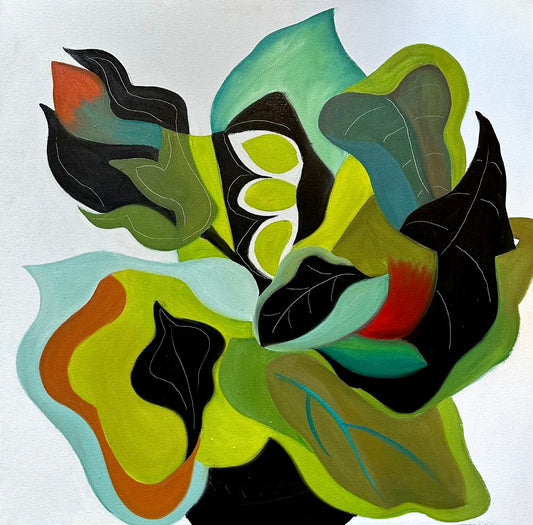
Intentionality. Strong abstract paintings are built on decisions, not accidents. The placement of a form, the tension between warm and cool tones, the weight of a mark - these are choices. When you look closely at a work and sense that every element is where it is for a reason, that's intentionality.
Surface quality. Original abstract paintings reward close looking in a way reproductions never can. Texture, layering, the physical evidence of process - these create a visual experience that changes depending on light and distance. It's one of the clearest reasons to buy original rather than print.
Staying power. Ask yourself: will this work still hold my attention in five years? Abstract paintings with genuine depth tend to reveal something new each time you look. Works that rely purely on color impact or trendy aesthetics tend to flatten quickly.
Finding the right scale for your space
Scale is one of the most underestimated decisions in buying abstract art. A painting that commands attention in a gallery can disappear on a large wall at home - and a small work placed thoughtfully can anchor an entire room.
As a general rule, large-format abstract paintings (anything above 36 inches) work best as a room's focal point, on a wall with breathing room around them. Medium works (18–36 inches) are more versatile - strong enough to stand alone, flexible enough to work in groupings. Smaller abstracts are often best collected in multiples or placed where they'll be seen up close, like a study or hallway.
Color and your environment
One of the most practical questions when buying abstract paintings is how color will read in your actual space. Gallery lighting is designed to make work look its best — your home has its own light conditions, wall colors, and furniture.
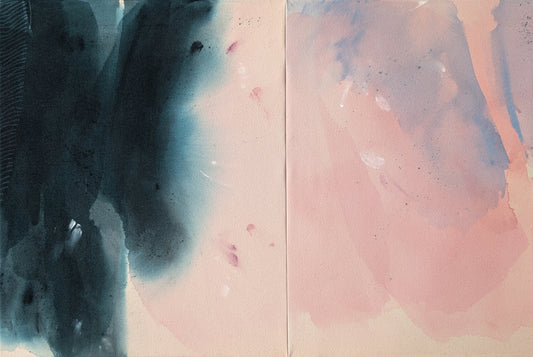
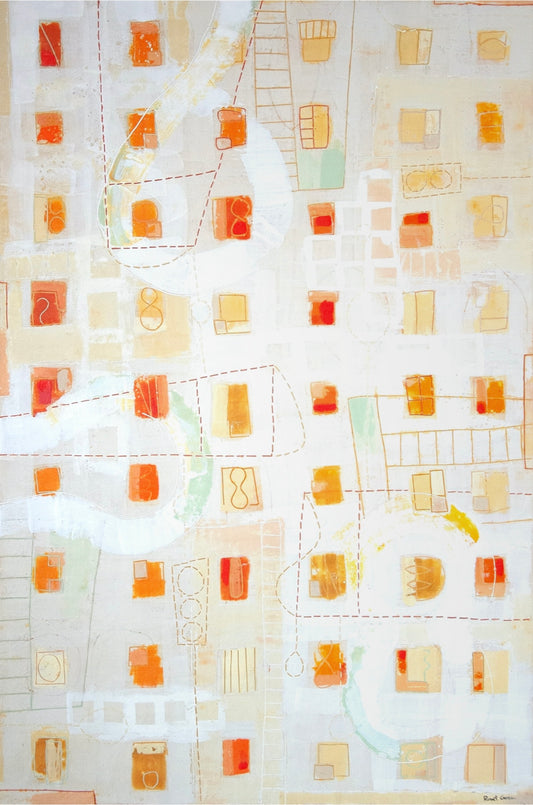
Rather than trying to match a painting to your décor, look for works where the dominant tones are compatible with your environment without being identical to it. Contrast is often more interesting than coordination. A work with warm ochres and deep earth tones can transform a neutral space. A cool, atmospheric abstraction can bring calm to a room that already has strong visual activity.
Original art vs. prints - why it matters
The market for high-quality abstract art prints has grown significantly, and there are contexts where prints make sense. But there's a meaningful difference between owning an original painting and owning a reproduction - not just in value, but in experience.
An original abstract painting is a physical record of someone's process. The paint has weight. The surface has history. When you live with an original work, that physical presence is part of what you're responding to every day. It's a different relationship than living with an image of a painting.
For collectors at any level, original works in the $400–$6,000 range represent some of the best value in the contemporary art market - particularly works by artists with exhibition histories and gallery representation.
Where to start
If you're new to collecting abstract art, the most honest advice is to trust your eye and take your time. Visit the work in person when possible. Ask about the artist's practice and background. Look for galleries that represent artists seriously - with exhibition histories, curatorial context, and genuine relationships with the artists they show.
At Art Scout, we represent a curated group of contemporary abstract painters and mixed-media artists whose work spans a range of scales, mediums, and price points. Browse our abstract collection or reach out directly - we're happy to help you find the right work for your space and your eye.
Art Scout is an online contemporary art gallery based in Monterey, California, representing internationally exhibited and museum-collected artists from around the world. Through exhibitions, art fairs, and thoughtful digital presentation, Art Scout connects collectors with original works distinguished by strong visual language, material sensitivity, and contemporary relevance.